Podcast

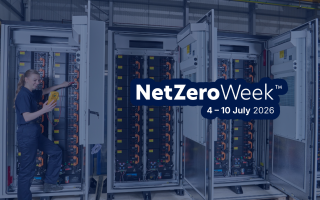
As the UK works towards Net Zero by 2050, Lead Engineer Hannah Magowan explains how battery energy storage can help businesses reduce carbon emissions, manage rising electricity demand and overcome grid constraints.
The transition to Net Zero is changing how UK businesses generate, consume and manage energy. Electrification, renewable generation and new low-carbon technologies all have an important role to play, but they also create new challenges around electricity demand, grid capacity and energy costs.
Battery Energy Storage Systems (BESS) can form part of the solution, giving businesses greater control over when and how they use electricity.
For Hannah Magowan, Lead Engineer at Dale Power Solutions, this opportunity to contribute to the energy transition is one of the aspects that drew her towards battery energy storage.
Hannah has spent over 10 years at Dale, progressing to a Level 6 engineering apprenticeship through roles spanning software development and new product development. Today, she supports the development and deployment of BESS solutions across a range of sectors, combining her technical background with customer-facing engineering, feasibility modelling, and project management.
For Hannah, working with BESS provides an opportunity to apply engineering to the practical challenges businesses face as they decarbonise.
In this clip from Dale Power Solutions’ CurrentTalks podcast, Hannah discusses growing up with an awareness of climate change and why helping businesses overcome the challenges associated with decarbonisation makes working with battery energy storage particularly rewarding.
I’m part of a generation that’s grown up knowing about climate change, and it’s really exciting to be part of the solution. So, although [what I do] is a very small drop in the ocean of what the solution is, especially to becoming Net Zero, you feel like you’re helping businesses find solutions, whether that’s with reducing CO₂ emissions, reducing their energy bills or overcoming the fact that they do want to reduce CO₂, but that involves upping their electrical consumption.
How do they actually get over the fact that their grid connection isn’t capable of it? And designing those solutions to help them move forward.
Hannah’s comments highlight an important challenge within the Net Zero transition: reducing CO₂ emissions does not necessarily mean using less electricity. In many cases, decarbonisation actually increases electrical demand.
The UK has a legally binding target to reach Net Zero greenhouse gas emissions by 2050, meaning that any residual greenhouse gas emissions will need to be balanced by removing an equivalent amount of greenhouse gases from the atmosphere.
Significant progress has already been made, with provisional figures estimating that UK net territorial greenhouse gas emissions were 367 million tonnes of carbon dioxide equivalent (MtCO₂e) in 2025. This is 2% lower than in 2024 and 54% below 1990 levels.
Industrial emissions also fell by approximately 12% in 2025, influenced by blast furnace closures in the iron and steel industry and reduced gas consumption.
Despite the long-term reduction in emissions since 1990, further decarbonisation is required across electricity, transport, buildings and industry if the UK is to meet its future climate commitments.
The UK’s journey towards Net Zero is marked by both clear evidence of a changing climate and increasingly ambitious emissions-reduction targets, with key milestones stretching from recent climate records to 2050.
Year | Milestones & Records |
2018 | ~20cm approximate rise in global mean sea level between 1901 and 2018 |
2025 | UK greenhouse gas emissions provisionally reached 367 MtCO₂e, 54% below 1990 levels. 2025 was also the UK's warmest year since records began in 1884. |
2030 | UK commitment to reduce emissions by at least 68% from 1990 levels, alongside the ambition for a clean power system in Great Britain. |
2035 | UK's international emissions-reduction commitment of at least 81% from 1990 levels under its Nationally Determined Contribution (NDC). |
2042 | The Seventh Carbon Budget for 2038–42 is set at 535 MtCO₂e, equivalent to roughly an 87% reduction from 1990 levels. |
2050 | UK legally binding Net Zero target. Any remaining greenhouse gas emissions must be balanced by removing an equivalent amount from the atmosphere. |
Climate change is increasingly visible in temperature records. 2025 was the warmest year recorded in the UK since the series began in 1884, while the decade from 2016–2025 was 1.33°C warmer than the 1961–1990 average. This is significant because it reflects sustained warming across an entire decade, with the UK warming at around 0.25°C per decade since the 1980s and temperature extremes becoming more frequent and intense.
Four of the five warmest years recorded in the UK have also now occurred within the last five years, forming part of a clear long-term warming trend consistent with human-caused climate change.
Globally, mean sea level also rose by around 20cm between 1901 and 2018. Rising temperatures contribute to sea-level rise in two main ways: seawater expands as it warms, while melting glaciers and land-based ice sheets add additional water to the oceans.
Decarbonisation often involves replacing fossil-fuelled technologies with electrical alternatives. For businesses, this can include:
Transport: replacing petrol and diesel vehicles with EVs.
Heating: replacing fossil-fuelled heating with electric alternatives such as heat pumps.
Industrial processes: electrifying equipment and processes previously powered by fossil fuels.
This means a business can reduce its CO₂ emissions while increasing its electricity demand. Where additional demand approaches or exceeds the site's grid connection capacity, BESS can help manage these constraints without relying solely on a grid connection upgrade.
Battery energy storage systems (BESS) allow electricity to be stored when it is available and discharged when it is needed. Depending on the site, tariff, generation profile and application, this can support several objectives.
A BESS can help businesses shift their electricity consumption from periods of higher grid carbon intensity to periods when lower-carbon electricity is available.
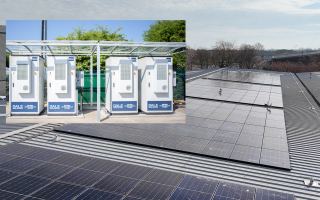
When combined with renewable generation, businesses can further reduce grid imports by storing surplus energy generated on site for later use.
Energy prices can vary considerably throughout the day under suitable time-of-use or variable electricity tariffs.
A battery can be programmed to charge during lower-cost periods and discharge during higher-cost periods, reducing the amount of expensive electricity a site needs to import.
When combined with renewable generation, businesses may be able to further reduce grid imports by storing surplus onsite energy for use later in the day.
Electrification can create another problem for businesses: their maximum electricity demand may begin to approach or exceed their agreed grid connection capacity.
Peak shaving uses a BESS to discharge during periods of high site demand.
Rather than drawing the entire peak load from the grid, the battery supplies part of the required electricity. This reduces the site's maximum grid import while allowing the electrical load behind the meter to be higher.
For businesses introducing EV charging, electrified equipment or other large electrical loads, this can help accommodate additional demand within an existing grid connection.
The transition towards EVs, electric heating and electrically powered industrial processes means electricity is likely to become increasingly important to businesses pursuing decarbonisation.
BESS can provide greater flexibility around that electricity demand.
Instead of the site's grid connection being the only source capable of meeting instantaneous demand, stored energy can be used strategically to supplement the grid during periods of higher consumption.
There is no single BESS configuration suitable for every organisation.
A manufacturer's operating hours, electricity demand and decarbonisation objectives may be completely different from those of a water treatment plant, commercial facility or EV charging hub.
At Dale Power Solutions, the process begins by understanding the individual site.
Our BESS team analyse electricity consumption, load profiles, existing infrastructure and future requirements to assess where battery energy storage could provide value. This includes BESS modelling and feasibility assessments to determine appropriate battery capacity, power requirements and operating strategies.
As Hannah explained, the objective is ultimately to help customers find a practical route forward, whether their priority is reducing CO₂ emissions, lowering energy costs, integrating renewable generation, overcoming grid constraints or supporting increased electrification.
The journey towards 2050 will require significant changes to the UK's energy system. Battery storage will not provide the entire solution. However, it can play an important role by helping businesses integrate renewable generation, manage electricity demand and overcome grid constraints.
Contact Dale Power Solutions to discuss your energy requirements and explore whether BESS could support your transition.
Net Zero means achieving a balance between the greenhouse gases emitted and those removed from the atmosphere. The UK has a legally binding target to reach Net Zero greenhouse gas emissions by 2050.
A Battery Energy Storage System (BESS) stores electrical energy for later use. Businesses can use BESS for applications including peak shaving, renewable energy optimisation, tariff optimisation and managing electricity demand.
Decarbonisation often involves replacing fossil-fuelled technologies with electrical alternatives, such as replacing petrol and diesel vehicles with EVs or gas heating with heat pumps. Electricity consumption can therefore increase even while the organisation's overall greenhouse gas emissions decrease.
A Nationally Determined Contribution (NDC) is a country's climate commitment under the Paris Agreement. The UK's current 2035 NDC commits it to reducing greenhouse gas emissions by at least 81% compared with 1990 levels, based on the scope of that commitment.