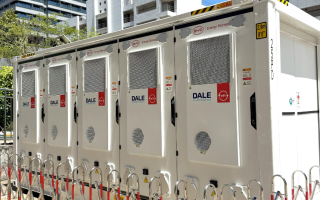
How Can Peak Shaving Be Used with Battery Storage to Optimise Energy Use and Maximise Savings?
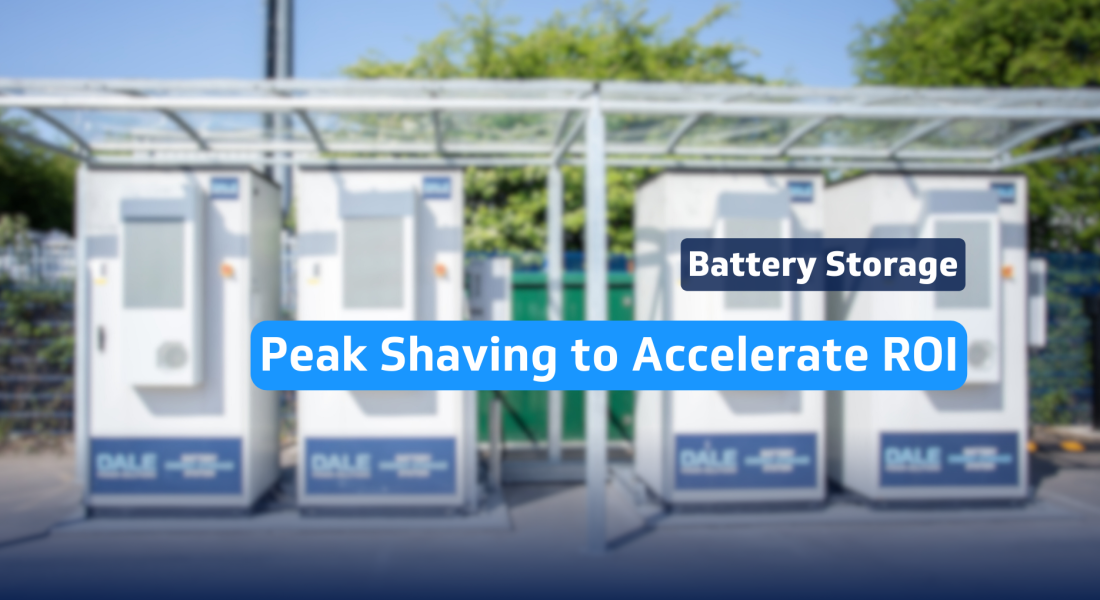
Energy demand fluctuates throughout the day in a pattern of peaks and troughs that can be forecasted and strategically managed on-site for commercial and industrial energy users. The ability to increase independence from the grid is particularly valuable as organisations across the UK face constraints on import capacity and grid connection delays.
As electrification accelerates through EV charging, heat pumps, automation, and site expansion, businesses can approach or exceed their permitted grid connection limit. Upgrading that connection can be costly, subject to long lead times, and impacted by wider grid reform and network reinforcement delays. At the same time, peak electricity demand periods often coincide with higher electricity tariffs and increased grid carbon intensity, further impacting operating costs and Scope 2 emissions.
Peak shaving provides a strategic solution to manage these pressures. By integrating Battery Energy Storage Systems (BESS), organisations can manage import capacity more effectively, improve energy efficiency, and strengthen overall power resilience.
Peak shaving reduces the amount of electricity drawn from the grid during periods of high operational demand by using stored energy instead. This energy is accumulated during periods of lower operational and grid demand, often overnight when electricity tariffs are typically lower or when on-site renewable generation exceeds energy consumption.
This allows a site to prevent demand spikes and operate within its existing import capacity. Rather than increasing grid reliance at times of peak load, the Battery Energy Storage System (BESS) discharges stored energy to support the site, flattening the demand profile.
The graph below illustrates a typical daily electricity demand profile, showing how a BESS charges during low-demand periods and discharges during peak demand to reduce grid import and smooth the site load curve.
.png) By ‘shaving’ peak demand, businesses can:
By ‘shaving’ peak demand, businesses can:
Protect and Optimise Grid Capacity
Operate within existing grid import capacity.
Enable site expansion (e.g. EV charging, heat pumps, new equipment) without immediate grid reinforcement.
Reduce the risk of exceeding supply limits or blowing incoming Distribution Network Operator (DNO) fuses.
Reduce Financial Exposure
Mitigate demand charges and capacity penalties.
Lower peak-time electricity costs.
Improve Sustainability and Operational Stability
Decrease reliance on carbon-intensive peak grid generation.
Improve operational efficiency and load stability.
A BESS optimises peak shaving through an intelligent, controlled charge-discharge cycle designed to manage import capacity while maximising financial return.
Charging During Off-Peak or Low-Demand Periods: The BESS charges when electricity demand and tariffs are lower, often overnight under variable pricing structures, or from on-site renewable generation, storing lower-cost or low-carbon energy for later use.
Bespoke Import Control and Grid Import Reduction: The system discharges stored energy in line with the site’s load profile and permitted connection limits, preventing demand spikes and ensuring the facility operates within its import capacity.
Dynamic Load Monitoring: An advanced Energy Management System (EMS) tracks site demand and grid conditions, automatically discharging energy when required to optimise capacity, stabilise load and maintain cost control.
Peak shaving is a strategic response to grid capacity constraints and rising infrastructure costs. By operating within existing import limits and avoiding demand charges, businesses can enable expansion, stabilise energy expenditure and reduce Scope 2 emissions. Integrated into a broader energy strategy, battery storage enhances resilience while delivering a measurable commercial advantage.