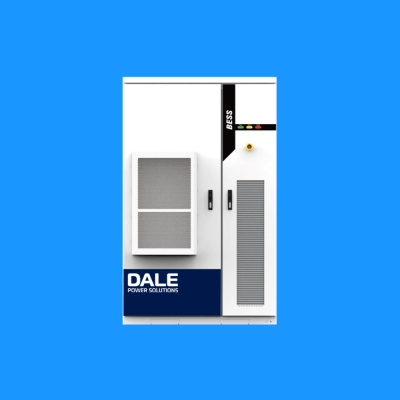
Achieve Up to 50% CO2 and 80% Energy Bill Savings with Battery Energy Storage Systems (BESS). We also offer flexible financing options.
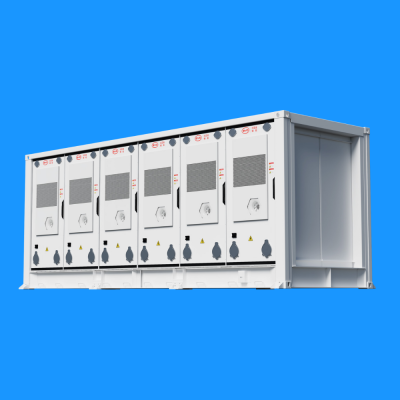
BESS store excess electricity, such as energy generated from solar or wind, for use during periods of high demand or peak tariffs. Each system is tailored to your site's energy needs, from compact 50kW units for smaller businesses to multi-megawatt, containerised solutions for larger operations. They can be installed behind or in front-of-the-meter to maximise renewable use and reduce grid reliance for cleaner, more cost-effective energy.
As electricity prices rise and pressure mounts to cut carbon emissions, businesses are turning to Battery Energy Storage Systems (BESS) as a smart, future-ready solution. BESS store cheaper or onsite renewable power for use during peak demand, cutting costs, reducing emissions, and unlocking new revenue through grid support or energy resale.
.png)
Lower Energy Bills - Use stored power during peak pricing for significant savings.
Smaller Carbon Footprint – Reduce reliance on fossil fuels and get closer to Net Zero.
Extra Revenue – Sell surplus energy or support grid balancing for passive income.
Renewable Optimisation – Store and use more of your own solar or wind power.
Improved Power Quality – Enjoy steady voltage and reduced disruption.
EV-ready – Support electric vehicle charging infrastructure.
Resilience – Minimise downtime and reduce reliance on diesel generators.
As your full BESS engineering, procurement, commissioning, and installation (EPCI) partner, we deliver tailored, cost-effective BESS solutions to meet your site’s energy goals, whether that means lowering costs, boosting sustainability, or improving resilience.
Analysis – A feasibility study reviewing your energy use, renewable energy resources, and ESG goals.
Proposal – A detailed cost-benefit analysis is calculated using advanced modelling tools.
Survey – A site survey is carried out and the system system is finalised.
Install – Expert engineers handle installation and commission, with a dedicated project manager overseeing the process.
Maintain – Ongoing support from our nationwide service team keeps your system running at peak performance.
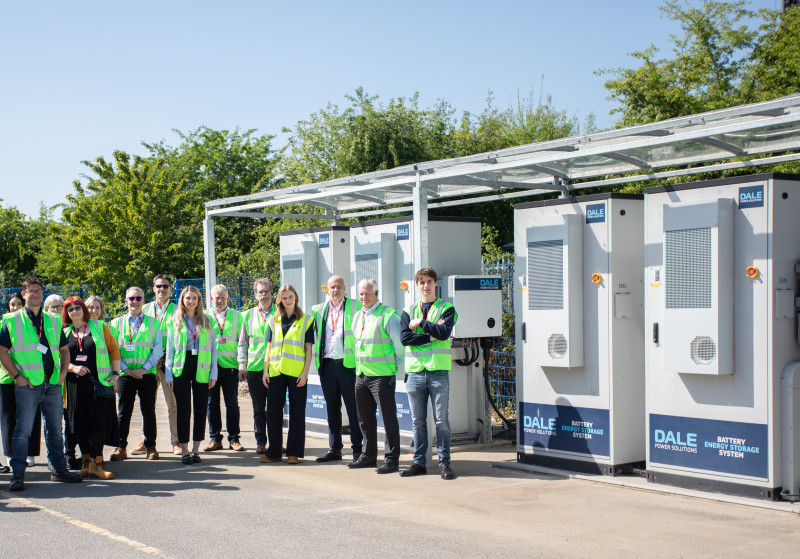
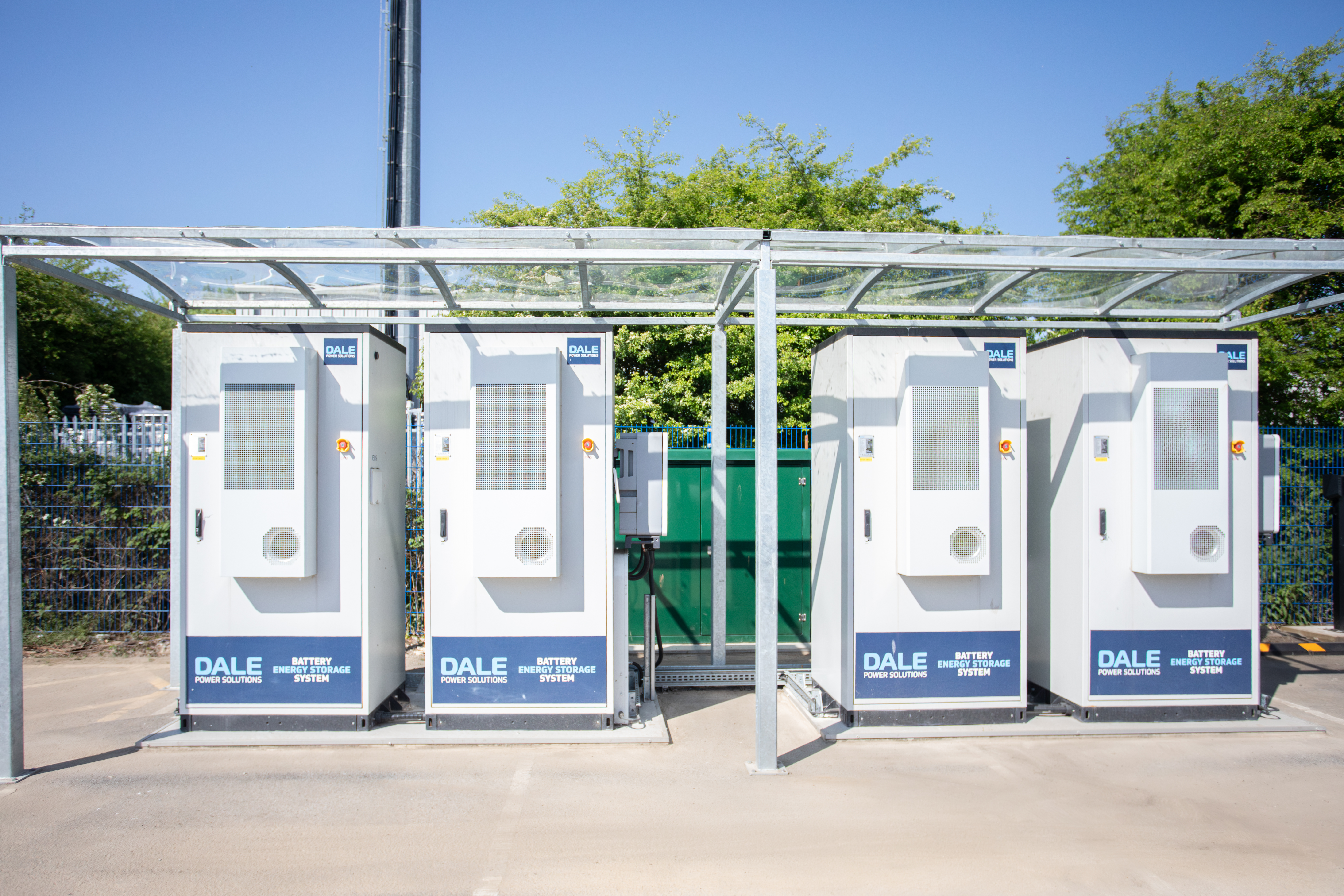
At our Scarborough headquarters, we installed a 1.2MWh, 500kW Battery Energy Storage System (BESS) in 2024 to optimise energy usage and manage demand from testing high-powered UPS and generators. These tests create temporary spikes that exceed our grid connection. The BESS charges during off-peak periods and discharges during peak times, thereby reducing energy costs and alleviating grid pressure. Now integrated with our solar array, it also stores excess renewable energy for later use. This system enhances resilience, reduces costs, and demonstrates the real-world value of BESS for energy-intensive industries seeking flexibility, sustainability, and smarter power management.
 Ready to Reduce Your Energy Bills and Boost Sustainability?
Our engineers design and deliver bespoke Battery Energy Storage Systems (BESS) to help you cut costs, lower emissions, and futureproof your power.
Use our quick Energy Savings Calculator to see how much you could cut your energy bills with a battery storage system from Dale Power Solutions.
Try it now and start saving
The UK electricity system has experienced high levels of grid resilience historically – offering a high degree of confidence to businesses and consumers that power will be available 24 hours a day, 7 days a week, 365 days per year. However, we must be able to respond to the more severe, less frequent events to ensure power supplies are maintained or restored quickly following such an event. Therefore, grid resilience is ‘the ability to withstand and reduce the magnitude and/or duration of disruptive events, which includes the capability to anticipate, absorb, adapt to, and/or rapidly recover from such events‘.
Before recommending any products or services, we will always discuss site requirements with you to give us a greater understanding of your needs. In general however, it is likely that you will need one of the following products and services for grid resilience:
Backup generator.
Battery replacement.
Battery based Distributed Storage Solutions (DSS).
UPS maintenance.
Generator maintenance.
Spare parts.
Grid resilience means the ability to resume operations quickly following a disruption such as a power outage or blackout. This stability is important for sectors such as healthcare which rely on life saving equipment. Grid resiliency is also the ability to cope with increasing demand which is increasingly significant as we transition to net zero and our demands for electricity increase.
Replacement batteries can be purchased for UPS. Replacing the batteries every 3-5 years can extend the lifespan of your UPS. We can advise you on the best battery for your product. We sell a wide range of batteries including: valve regulated lead acid batteries; flooded lead acid batteries; flooded nickel cadmium batteries (NiCd batteries); gas recombination low maintenance NiCd batteries; and lithium ion stationary batteries.
No – you should never mix batteries by type, battery age or manufacturer for that matter. Always remove and replace all batteries in your UPS or generator at the same time, and follow the manufacturer’s recommendations when it comes to which batteries to use.
Starter Batteries: Owing to the harsh starting conditions (high discharge for the initial start and then high charge currents from the charge alternators for a rapid recharge) and bearing in mind that they are positioned near an engine, means that starter batteries do not have the lifespan they would have if they were connected to a UPS. Battery manufacturers therefore do not provide a recommendation for changing. We can, and do advise, depending on the battery type, environment and application. A reminder to change batteries can be set in most cases to the UPS operating software.
Batteries have a typical lifespan of 3 – 5 years, with causes of battery failure including loss of electrolyte and inaccurate float charge voltage. However, factors such as battery chemistry, battery cycling and suitable storage conditions can greatly affect how long your battery lasts. We strongly recommend carrying out battery maintenance tests to keep abreast of any battery faults or issues, as batteries are one of the most integral parts of your UPS system. Battery testers can visit your business, site or facility every 6 months to a year, ensuring you’re always in control of your critical power equipment.
As batteries go unused, with no charging schedule, their battery life will decrease. When it comes to the self-discharge characteristics of lead-acid batteries for example, it is important that they are charged after 6-10 months of battery storage. Otherwise, permanent loss of capacity will occur between 18-30 months.
Battery maintenance can include everything from battery testing and battery replacement through to physical inspections, gravity checks and voltage readings, as well as checking the open circuit battery and UPS float voltages. It can also include voltage measurement, discharge testing, cell testing and battery hire.
The standard lifespan for VRLA batteries is 3 – 5 years. However, expected battery life can vary dependent on environmental conditions, number of discharge cycles, and suitable maintenance. Having a regular schedule of battery maintenance and battery monitoring to ensure that you know when your batteries are reaching their end-of-life is always a good idea.
Hot-swappable batteries can be changed out while the UPS power supply system is running. User-replaceable batteries are typically found in smaller UPS systems and require no training nor tools to replace. Batteries can be both hot-swappable and user-replaceable.
The IEE defines ‘end of useful life’ for a UPS battery as the point where it can no longer supply 80% of its rated capacity in ampere-hours. When your battery reaches 80% of its rated capacity, the ageing process accelerates and the battery should be replaced.
Before recommending any products or services, we will always discuss site requirements with you to give us a greater understanding of your needs. In general however, it is likely that you will need one of the following products and services for grid resilience:
Backup generator.
Battery replacement.
Battery based Distributed Storage Solutions (DSS).
UPS maintenance.
Generator maintenance.
Spare parts.
Load loss, property damage and fire are all hazards associated with improper battery monitoring and battery maintenance, as is personal injury. Battery maintenance is imperative to the health and safety of your team, and the functioning of your business.
UPS batteries and generator batteries can fail for a number of reasons, including:
High or uneven temperatures.
Inaccurate float charge voltage.
Loose inter-cell links or connections
Loss of electrolyte due to drying out or a damaged case
Lack of battery maintenance.
Containerised UPS are housed in standard shipping containers. This makes them easy to transport, and install, and they can be used in a variety of locations, both indoors and outdoors. They typically include all the components necessary for power protetion, such as: UPS system, batteries, bypass switch, air conditioning, power monitoring and fire supression. We can help you customise the UPS to meet the needs of a specific application, such as adding additional batteries for longer runtime or paralleling multiple UPS systems for increased redundancy.
When a power outage occurs, a UPS will immediately switch to battery power to provide a continuous power supply to connected equipment. However, the UPS batteries have a limited runtime, so a generator is needed to provide long-term power protection. When initiated the UPS will send a signal to the generator to start up. Once the generator is running, the UPS will switch to generator power. When the power outage is over and grid power is restored, the UPS will return to utility power and recharge its batteries. The generator will then shut down.
When disruption to your power occurs it will provide instantaneous protection by immediately resorting to the onboard battery which forms part of the uninterruptible power supply.
A generator provides standby power until the mains power can be reinstated during a power outage. This is supported by a UPS (Uninterruptible Power Supply) which ensures a seamless transition from your mains power to your backup power supply. Batteries provide power to your UPS and generator.
An uninterruptible power supply (UPS) provides a source of power for the equipment it protects. If there is a disruption to power, the UPS has an on-board battery to automatically supply to electrical equipment until the disruption is over or back-up generators kick-in.
WIMES (Water Industry Mechanical and Electrical Specifications) UPS (uninterruptible power supply) is a robust critical power system built for harsh atmospheres such a dusty environments, moisture and humidity, as well as extremes in temperature and sites where robust solutions are required. They are available for both industrial and commercial applications.
The UK electricity system has experienced high levels of grid resilience historically – offering a high degree of confidence to businesses and consumers that power will be available 24 hours a day, 7 days a week, 365 days per year. However, we must be able to respond to the more severe, less frequent events to ensure power supplies are maintained or restored quickly following such an event. Therefore, grid resilience is ‘the ability to withstand and reduce the magnitude and/or duration of disruptive events, which includes the capability to anticipate, absorb, adapt to, and/or rapidly recover from such events‘.
Before recommending any products or services, we will always discuss site requirements with you to give us a greater understanding of your needs. In general however, it is likely that you will need one of the following products and services for grid resilience:
Backup generator.
Battery replacement.
Battery based Distributed Storage Solutions (DSS).
UPS maintenance.
Generator maintenance.
Spare parts.
The backup power you require depends on a number of factors and will be unique to your circumstances. When considering your needs you should think about the following:
Critical loads
What equipment or part of your estate is it that directly affects your ability to maintain key operations and that must be kept running during a mains power supply failure, for example a data centre’s servers or life support equipment in a hospital.
Essential loads
What is it that provides secondary support services that even though they aren’t operationally critical, may still be required for health and safety reasons, such as emergency lighting. These loads must still have some form of backup but do not require uninterrupted power, so can be allowed to fail or ride through the time it takes for a generator to start.
Non-essential loads
Finally, there is the equipment and parts of your organisation that you can afford to lose when the mains power supply fails, for example printers, general lighting and desk fans.
You may have generators on-site but in the event the power supply fails you may have systems where you can’t afford to have down time whilst the generator kicks-in. A uninterruptible power supply (UPS) can save your operations and prevent the loss of critical data by keeping your equipment running in the event of a power outage.
Grid resilience means the ability to resume operations quickly following a disruption such as a power outage or blackout. This stability is important for sectors such as healthcare which rely on life saving equipment. Grid resiliency is also the ability to cope with increasing demand which is increasingly significant as we transition to net zero and our demands for electricity increase.
Filter