Energy Sector News: Grid Reform, Great British Energy (GBE) and the Growing Role of Battery Storage
The UK’s transition to a cleaner, more electrified future is being held back by a growing crisis of grid connection delays.
The electricity connections pipeline has become heavily oversubscribed, with more than 739 GW of projects reportedly stuck in the queue, three times the 200–225 GW needed to meet the UK’s Clean Power by 2030 targets. As a result, businesses, local authorities and developers are facing wait times of up to 15 years just to secure a grid connection.
At the same time, the UK Government is signalling a faster, more ‘build-ready’ clean power push. Great British Energy (GBE) is tasked with this, as a publicly owned clean energy company established by the UK Government to invest in, develop, and accelerate renewable energy and energy storage projects, in support of national energy security, decarbonisation, and Clean Power by 2030 objectives.
GBE’s first announced projects include £180m for solar installations across hundreds of schools and hospitals, £10m for mayoral strategic authorities to invest in renewables, and £300m to support domestic offshore wind supply chains.
GBE’s role is clear in acting as a strategic developer and investor, co-developing projects with public and private partners and investing in the infrastructure and supply chains needed to unlock delivery at scale. Energy storage is explicitly included within the clean technologies it can support.
Three practical implications stand out in GBE’s Statement of Strategic Priorities (September 2025):
Faster public-sector rooftop solar
Funding for schools and hospitals will accelerate behind-the-meter solar deployment. These sites will increasingly require load management, resilience, and export limitation strategies to deliver projects at pace. Battery storage is a natural partner to solar here.
More place-based energy projects
The £10 million allocated to mayoral strategic authorities signals a growing pipeline of locally driven energy projects. These often face complex planning, network, and stakeholder challenges, where flexible assets like battery storage can de-risk delivery and improve project viability.
Greater focus on delivery confidence
GBE’s emphasis on UK supply chains and long-term capability points to a market where customers and partners will increasingly value deliverability, compliance, lifecycle support, and proven performance, rather than capex alone.
The National Energy System Operator (NESO), supported by Ofgem, has launched major reforms to the grid connections process. These aim to remove speculative ‘zombie’ projects and prioritise schemes that are viable and strategically aligned. These reforms were approved by Ofgem in April 2025.
While this is a positive step, for many commercial and industrial sites, the challenge is not just when the connection date arrives, but how to remain operational, compliant, and cost-efficient while waiting under existing grid agreements.
Battery energy storage systems (BESS) offer a practical, immediate route forward.
Unlike generation assets that depend on exporting to the grid, BESS delivers value behind-the-meter:
Peak shaving to avoid breaching connection agreements and incurring penalties
Tariff optimisation by charging when electricity is cheaper and discharging during higher-cost periods
Operational resilience for sites with high-demand processes, sensitive loads, or growth plans
Enabling more solar by increasing self-consumption and managing export constraints
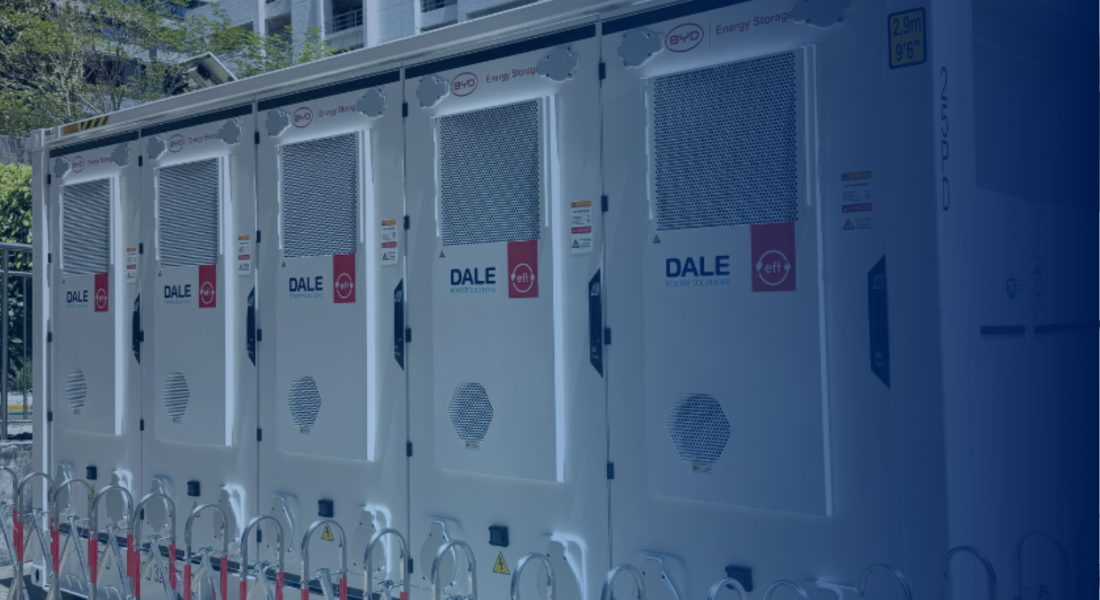
At Dale Power Solutions, we’ve seen this first-hand. Even before installing solar panels at our site, our BESS was already supporting high-demand product testing in our factory. By discharging lower-cost, lower-carbon energy to meet peak loads during testing, we avoid breaching our grid connection agreement, protecting us from penalties and operational disruptions.
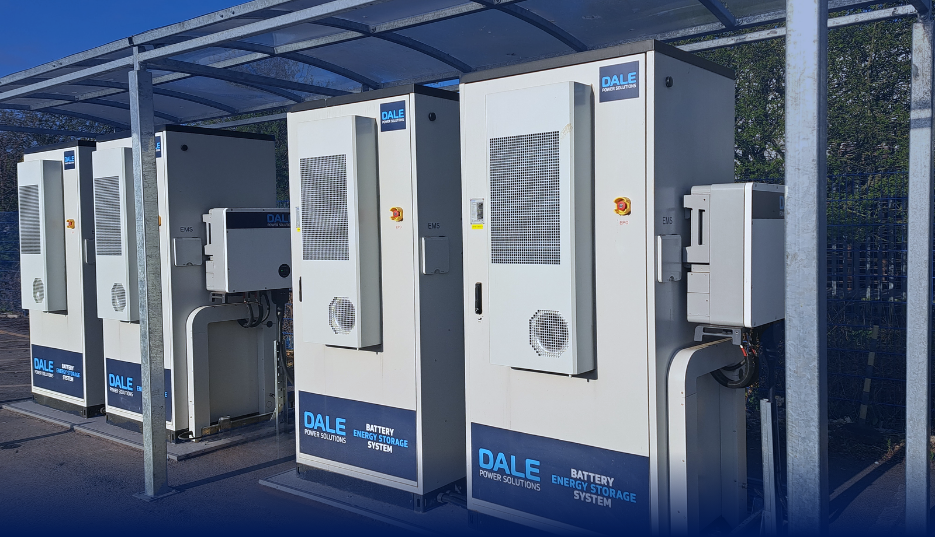 Pictured: Dale Power Solutions' Onsite BESS at Our Scarborough Site
Across the UK, businesses and developers, from data centres to renewable energy providers, are finding themselves 'grid-locked', unable to deliver clean power to the system due to connection backlogs. Major players in the energy sector, including RWE, have highlighted that delays in grid access are preventing billions of pounds of potential investment into the UK economy.
As public funding flows into rooftop solar programmes and clean deployment accelerates, more organisations are discovering that electrical infrastructure and grid agreements are the real limiting factors.
Pairing commercial-scale solar with BESS helps customers:
Progress decarbonisation plans without waiting for major network upgrades
Protect operations while electrifying heat, fleets, or processes
Build a scalable energy roadmap that still works under constrained connections
At Dale Power Solutions, we’re proud to be delivering tailored BESS and solar solutions for businesses facing these challenges head-on, ensuring they stay operational, compliant, and energy efficient.
Contact us to discuss your application today, or find out more about our BESS capabilities and finance options.