Case Study: Dale Power Solutions Cuts Energy Costs by 30% with On-Site BESS and Solar at Scarborough Headquarters
Case Study
UK-based manufacturers, like Dale Power Solutions, are facing rising energy costs, increasing electrification demands, ambitious emissions targets, and growing pressure from grid infrastructure constraints. For energy-intensive businesses, this creates a clear need to reduce reliance on grid power, improve energy efficiency and invest in practical low-carbon technologies that support long-term operational resilience.
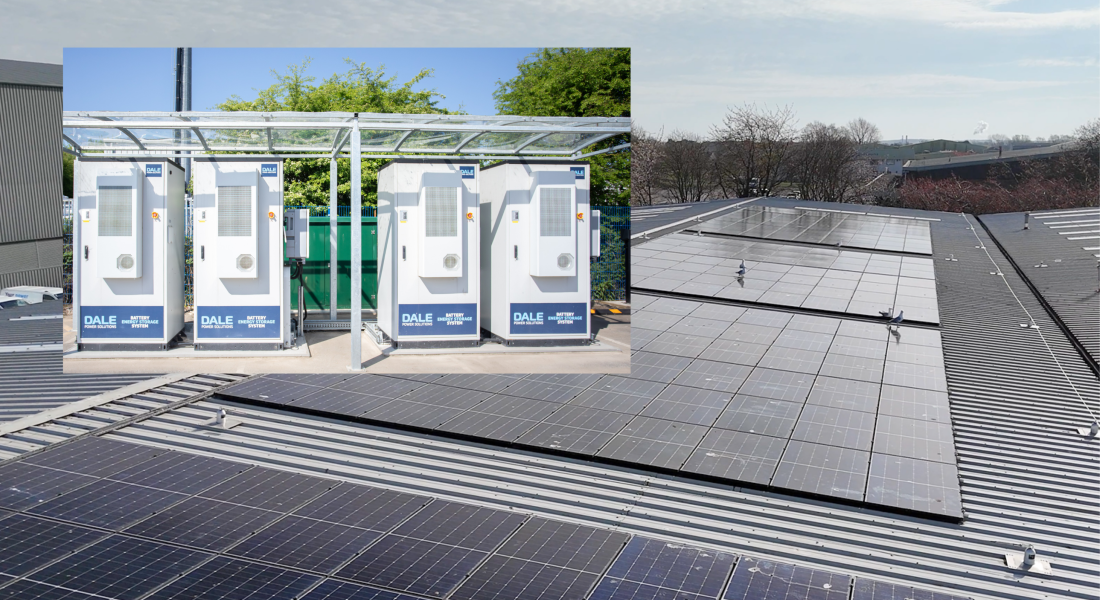
At Dale Power Solutions’ Scarborough headquarters and manufacturing facility, this challenge has been addressed by developing an integrated on-site energy system that combines battery storage, EV charging infrastructure, and solar PV generation. Delivered by Dale’s in-house Battery Storage & Renewables team, the project forms part of the company’s ongoing investment in practical, low-carbon energy infrastructure.
The full project included:
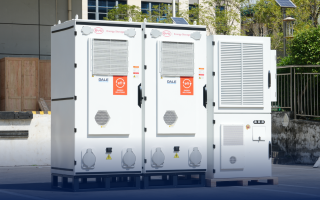
100 kW / 400 kWh Battery Energy Storage System installed at Dale’s Scarborough site
Four 22 kW EV charging points installed to support fleet electrification
48 PHEV service engineer vans in operation as of May 2026
113 kWp solar PV array added to increase on-site renewable generation
The installation has already delivered measurable operational, financial and environmental benefits, including:
30% reduction in energy costs through load shifting and intelligent energy management (based on the BESS only)
£9,000+ generated per year through grid services revenue
27.3-tonne reduction in Scope 2 CO₂ emissions in year one (based on the BESS & solar)
Before installation, the BESS was designed around Dale’s operational energy requirements, using half-hourly energy consumption data to assess site demand profiles and identify opportunities for load shifting, peak demand reduction and improved energy flexibility.
This data-led approach helped ensure that the system could support varying operational loads while also accommodating future requirements, including increased EV charging demand and the later integration of solar PV generation. Collaboration with the University of Sheffield also supported modelling of the solar PV contribution and wider system performance, helping to assess how the integrated system could deliver long-term operational and environmental benefits.
By designing the system around real site demand, Dale was able to ensure the BESS could discharge stored energy during peak periods, reduce grid import requirements and improve the site’s ability to manage fluctuating electrical loads.
The BESS was deployed alongside four 22 kW EV charging points, supporting the company’s growing electrification requirements and helping to manage the additional electrical demand created by EV charging.
Dale now has 48 Plug-in Hybrid Vehicles (PHEVs), representing around two-thirds of the company’s total service fleet, with further vehicles planned for rollout throughout 2026 as part of our fleet electrification strategy.
This transition is expected to significantly reduce vehicle-related emissions, with diesel models producing around 188g/km of CO₂ compared with approximately 37g/km for the hybrid equivalent, an 80% reduction. By supporting EV charging with on-site battery storage, Dale can better manage additional electrical demand and reduce the risk of exceeding grid capacity during peak periods.
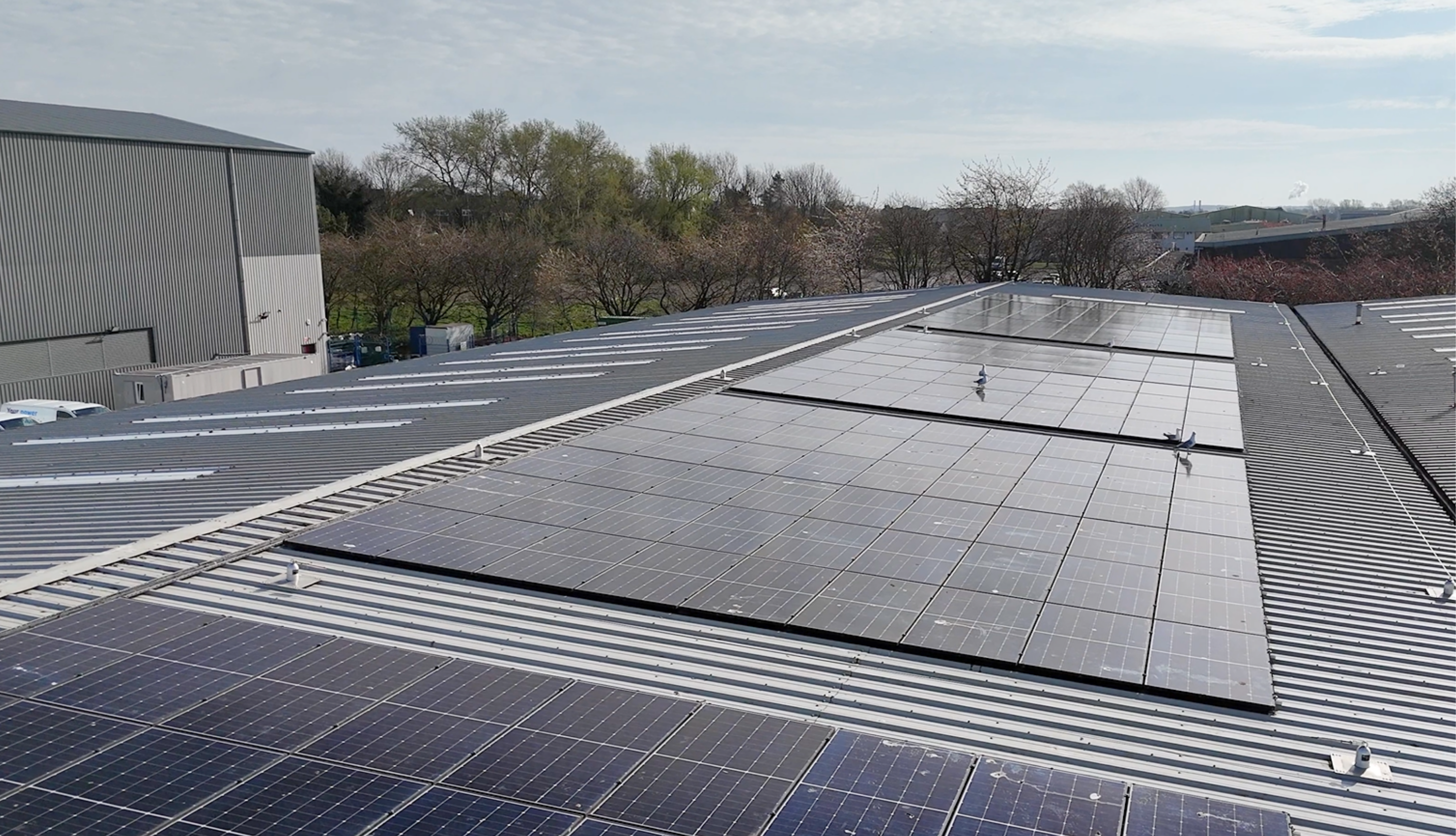 In 2025, the project was expanded further with the installation of a 113 kWp solar PV array. The addition of solar PV enables Dale to generate more renewable electricity on site, increasing the utilisation of stored energy within the BESS and further reducing reliance on grid electricity.
By integrating solar generation with battery storage, excess energy can be stored and used more effectively when site demand is higher. This improves overall energy efficiency and supports a more cost-effective, low-carbon approach to powering industrial operations.
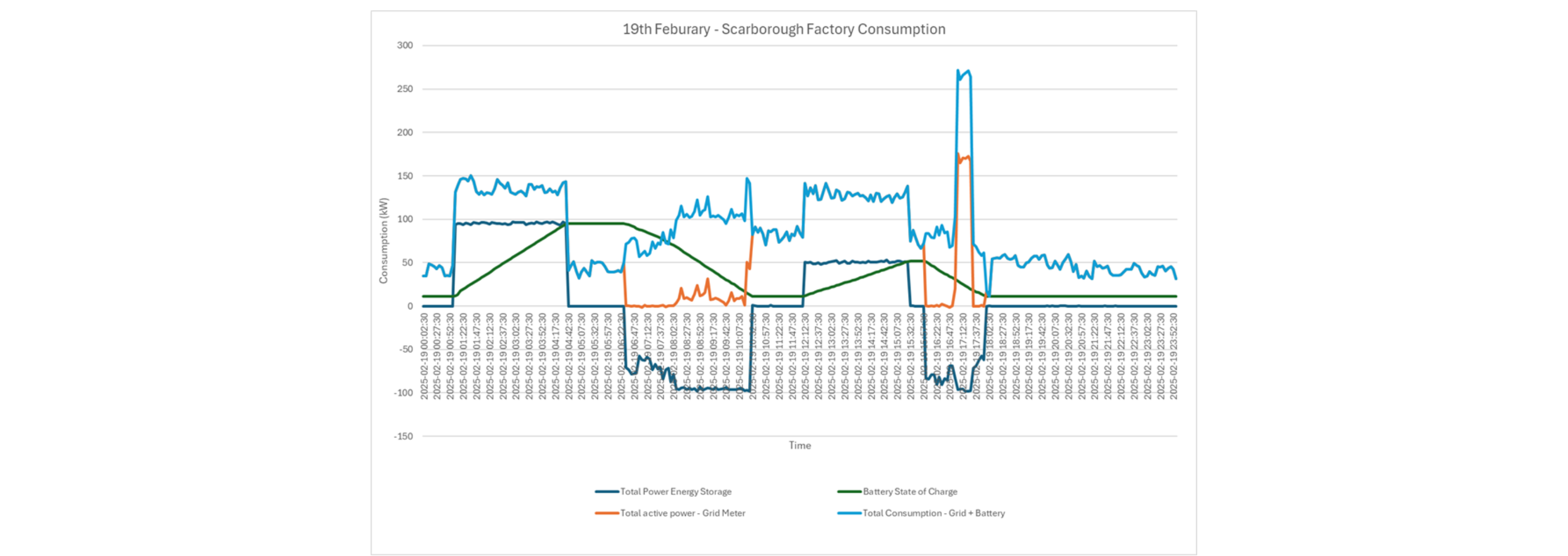 The operational benefits of the system were demonstrated during a period of high-demand manufacturer testing at Dale’s Scarborough site.
During testing, temporary increases in electrical demand risked exceeding the site’s grid import threshold. In response, the on-site BESS discharged stored energy to support the additional load, helping to prevent a grid overload event and avoid potential excess demand charges.
This provided a clear demonstration of the practical value of battery storage in industrial environments, particularly where temporary load spikes or operational peaks can place pressure on existing grid connections. For manufacturers with constrained grid capacity, BESS can provide an effective way to manage peak demand without compromising operational performance.
The integrated BESS, EV charging and solar installation has delivered measurable benefits for Dale’s Scarborough site, supporting cost reduction, carbon reduction and long-term operational resilience.
The 30% reduction in energy costs demonstrates the financial value of load shifting and intelligent energy management, while the £9,000+ generated per year through grid services revenue shows how battery storage can create additional value beyond reducing site energy consumption.
The project has also contributed to a 27.3-tonne reduction in Scope 2 CO₂ emissions in year one, including the contribution from solar PV generation. Alongside these measurable outcomes, the installation has improved Dale’s ability to manage peak demand, support fleet electrification and reduce reliance on grid electricity during high-demand periods.
The Scarborough installation combines battery storage, solar generation, and EV infrastructure into a single integrated energy system. By storing energy during lower demand periods and utilising onsite renewable generation more effectively, the system improves operational efficiency while reducing reliance on grid electricity during peak periods.
The project also provides a practical demonstration of Dale Power Solutions’ capabilities in delivering battery storage and renewable integration projects across commercial and industrial applications. Through a network of trusted quality partners, Dale can support customers with BESS and solar PV using in-house engineering expertise across the modelling, design and project management phases.
As energy demands continue to evolve across the UK industry, integrated technologies such as BESS and solar PV are expected to play an increasingly important role in supporting operational efficiency, sustainability targets, and energy resilience.
This project demonstrates how integrating battery storage, EV infrastructure, and solar generation can deliver a resilient, cost-effective, and low-carbon energy solution for industrial applications.