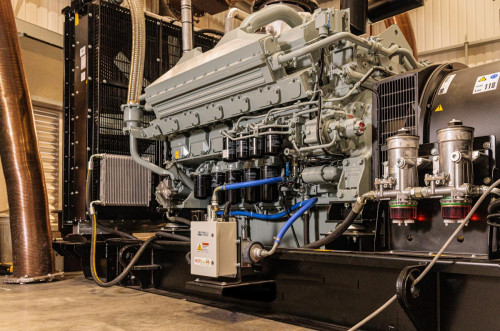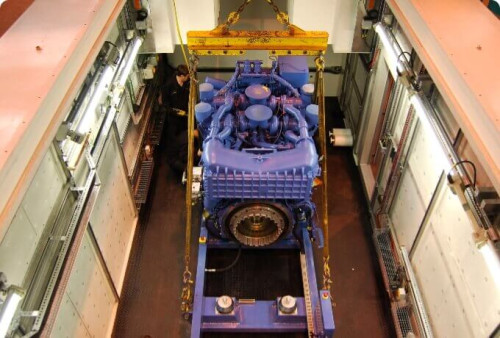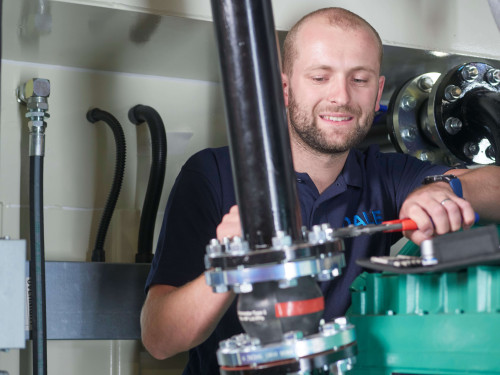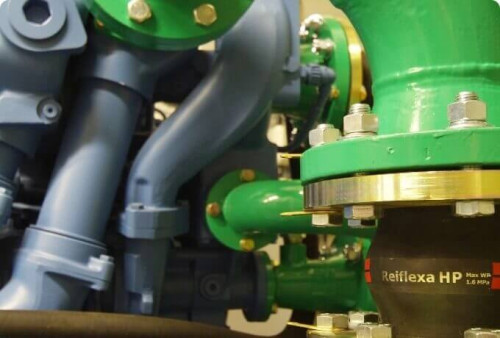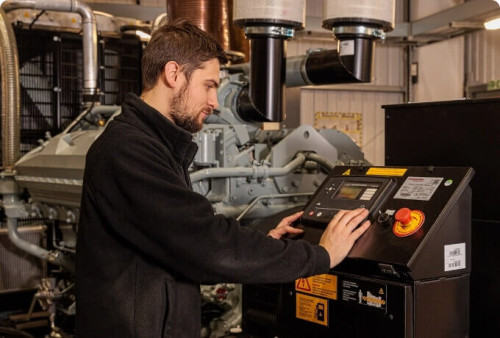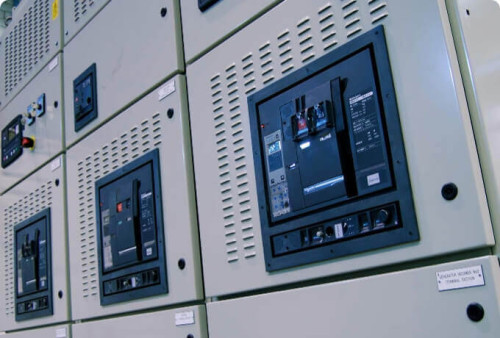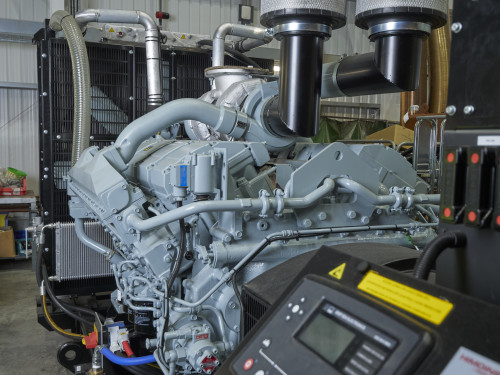
Our Generators deliver dependable backup power, designed to take over from short-term support systems and sustain large power loads for extended periods during a mains failure or disturbance.
Our Generators automatically activate during power loss to keep operations running without disruption and are backed by expert servicing, maintenance, and monitoring for sustained performance and long-term reliability.
Selecting the ideal Generator for an application requires expert insight and technical guidance. Whether you require a bespoke, containerised, canopy, or open set model, our team will support you in identifying and optimising the most suitable solution. For more complex requirements, we can design and manufacture fully bespoke Generators, tailored precisely to your application.
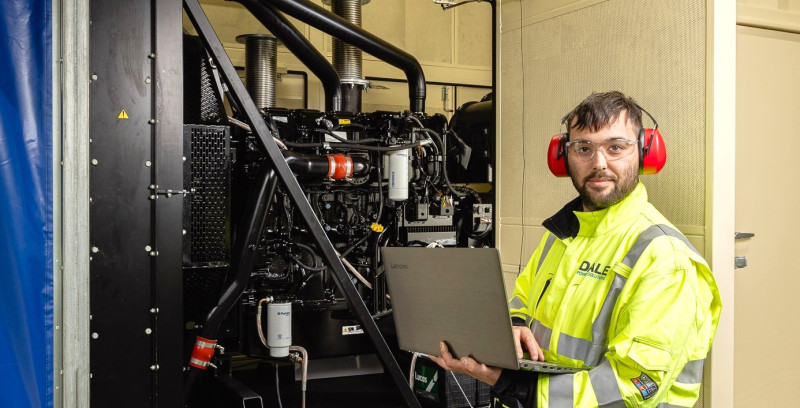
With over 90 years of Generator expertise, Dale Power Solutions has specialised in delivering reliable Generator systems since its inception. Generators remain at the core of our business, supported by in-house design, installation, and maintenance capabilities.
Our Bespoke Generators are custom-designed for projects where standard models don’t meet every need. Whether you require specific power outputs, alternative fuels, or adaptations for complex environments, we tailor solutions to your exact requirements.
We start by identifying the closest-fit generator from our range including, diesel, silent, offshore, renewable, and hybrid models and customise it accordingly. Modifications include noise-reducing enclosures, alternative fuel systems, or designs suited to space or environmental challenges.
Applications include hybrid systems for remote sites, low-emission units for clean-air zones, and weatherproof builds for offshore locations.
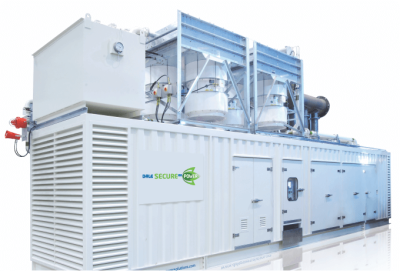
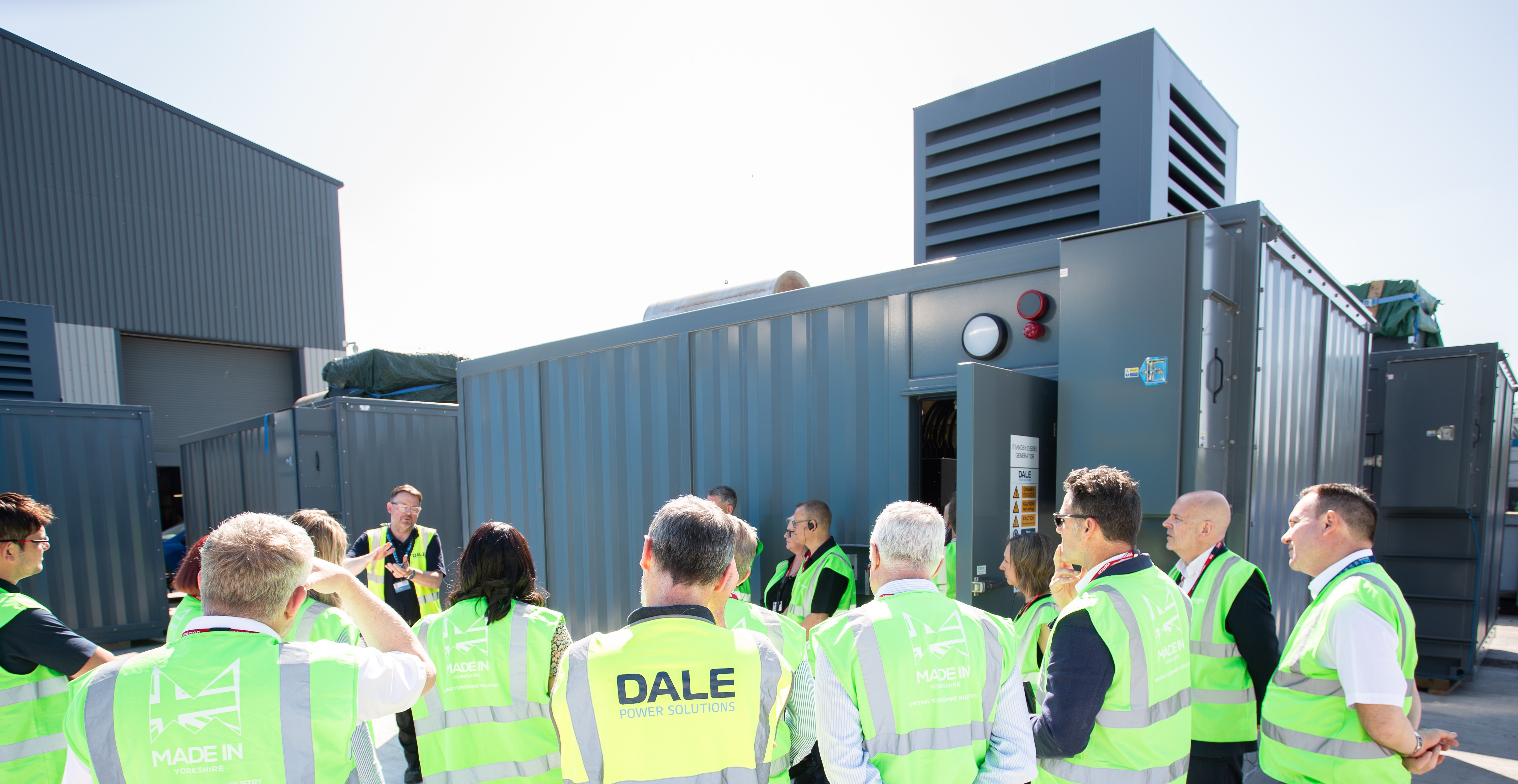
Our Containerised Generators are housed in durable steel shipping containers for easy transport and reliable performance in tough environments. Ideal for construction, industrial, and remote sites, they offer a robust, enclosed solution.
The container structure protects from the elements and allows for customisation, such as sound attenuation or extended fuel storage.
Common uses include temporary site power, remote backup systems, offshore projects, and mobile or semi-permanent installations.
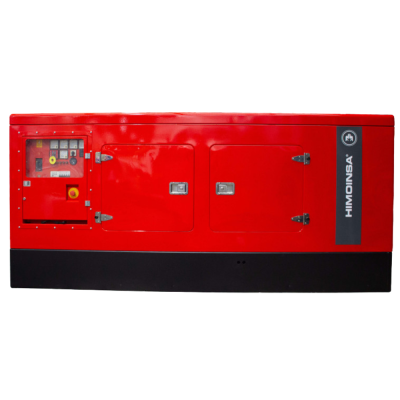
Our Canopy Generators are enclosed in sound-reducing, weatherproof canopies, making them ideal for outdoor use in noise-sensitive areas. Quieter than open sets, they offer fast deployment and simple integration with your building or site.
The compact design protects from the elements while keeping installation easy and noise emissions low.
Typical uses include backup power for commercial buildings, schools, healthcare sites, and any setting needing quiet, reliable outdoor power.
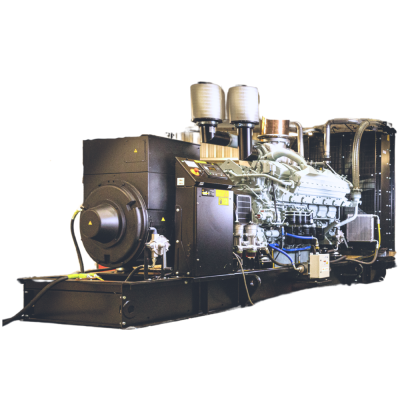
Our Open Set Generators are built without an outer enclosure, providing direct access to the engine for easier servicing and efficient ventilation. Best suited for indoor plant rooms or controlled environments.
With no canopy, these units allow heat to dissipate freely and simplify maintenance, ideal where weather and noise are managed on site.
Applications include integration into larger systems or use in facilities with existing acoustic and ventilation infrastructure.
 Design Process
Our expert team works closely with you to ensure your Generator is specified for long-term performance, factoring in your unique requirements, operating environment, and usage demands. This tailored approach is demonstrated in our Case Studies, where you can see how we've delivered lasting results across a variety of projects.
Generator durability is supported by our full-service offering, including planned preventative and predictive maintenance, as well as diesel fuel management, all delivered by our nationwide team of engineers to keep your system running at its best.
From design and installation to upgrades, servicing and 24/7 emergency support, we go beyond simply supplying Generator systems, we keep your power protected long term.
Talk to Our Team Today
Generators can be put into containers. There are a number of benefits to doing this including:
Easier transportation and installation making them ideal for temporary or remote applications.
They are more secure as typically they are lockable which prevents unauthorised access.
Containerised generators are protected from the weather
Noise is reduced as they can be fitted with soundproofing materials
When a power outage occurs, a UPS will immediately switch to battery power to provide a continuous power supply to connected equipment. However, the UPS batteries have a limited runtime, so a generator is needed to provide long-term power protection. When initiated the UPS will send a signal to the generator to start up. Once the generator is running, the UPS will switch to generator power. When the power outage is over and grid power is restored, the UPS will return to utility power and recharge its batteries. The generator will then shut down.
Electrical generators are pieces of critical power equipment that provide electricity when power from the power grid is unavailable. Interestingly enough, generators don’t actually create electricity. Instead, generators convert mechanical or chemical energy into electrical energy – by capturing the power of motion and turning it into electrical energy by forcing electrons from the external source through an electrical circuit. Once an electrical current has been established, it is directed through copper wires to power external machines, devices, or entire electrical systems.
Sizing your generator correctly is important to ensure you can power your equipment. To size an industrial generator you should consider the following factors:
What equipment the generator will be powering?: make list of the items that need to be powered and determine the starting and running wattage for each.
What is the total load requirement?: add up the starting and running wattage for all the equipment
What is the total load factor?: the load factor is the ratio of the average load to the peak load
What is the surge capacity?: The surge capacity is the amount of extra power that the generator can provide for a short period of time to equipment. It is typically 10-25% of the rated capacity of the generator.
A petrol generator is an alternative to diesel but typically used only for short periods. Greener alternatives include natural gas. These generators rely on underground access to natural gas. Another option is propane which is generally chosen when natural gas isn’t available.
Diesel generators are those that are run on diesel, and can typically be divided into two basic parts: a diesel engine and an electrical generator. Diesel generators can be used to provide power to places that are not powered by a power grid or can be used as a backup in case of a power outage.
Natural gas generators use natural gas however, and are used in both emergency and portable generator types. They are one of the most affordable and effective fuels among non-renewable resources for power generation.
LPG (Liquid Petroleum Gas) generators have powerful engines that run smoothly and quietly while providing dependable power when you need it most.
A generator provides standby power until the mains power can be reinstated during a power outage. This is supported by a UPS (Uninterruptible Power Supply) which ensures a seamless transition from your mains power to your backup power supply. Batteries provide power to your UPS and generator.
The UK electricity system has experienced high levels of grid resilience historically – offering a high degree of confidence to businesses and consumers that power will be available 24 hours a day, 7 days a week, 365 days per year. However, we must be able to respond to the more severe, less frequent events to ensure power supplies are maintained or restored quickly following such an event. Therefore, grid resilience is ‘the ability to withstand and reduce the magnitude and/or duration of disruptive events, which includes the capability to anticipate, absorb, adapt to, and/or rapidly recover from such events‘.
A backup or standby generator provides electrical power in the event of a power outage. Within seconds of the power loss the generator starts and the electrical load is transferred to the generator. When combined with an Uninterruptible Power Supply (UPS), it can provide complete continuity of power with zero downtime. Once power returns to the mains supply the electrical load transfers back and the generator reverts back to standby until the next outage. Most generators run on diesel, natural gas or liquid propane gas.
Before recommending any products or services, we will always discuss site requirements with you to give us a greater understanding of your needs. In general however, it is likely that you will need one of the following products and services for grid resilience:
Backup generator.
Battery replacement.
Battery based Distributed Storage Solutions (DSS).
UPS maintenance.
Generator maintenance.
Spare parts.
The backup power you require depends on a number of factors and will be unique to your circumstances. When considering your needs you should think about the following:
Critical loads
What equipment or part of your estate is it that directly affects your ability to maintain key operations and that must be kept running during a mains power supply failure, for example a data centre’s servers or life support equipment in a hospital.
Essential loads
What is it that provides secondary support services that even though they aren’t operationally critical, may still be required for health and safety reasons, such as emergency lighting. These loads must still have some form of backup but do not require uninterrupted power, so can be allowed to fail or ride through the time it takes for a generator to start.
Non-essential loads
Finally, there is the equipment and parts of your organisation that you can afford to lose when the mains power supply fails, for example printers, general lighting and desk fans.
Grid resilience means the ability to resume operations quickly following a disruption such as a power outage or blackout. This stability is important for sectors such as healthcare which rely on life saving equipment. Grid resiliency is also the ability to cope with increasing demand which is increasingly significant as we transition to net zero and our demands for electricity increase.
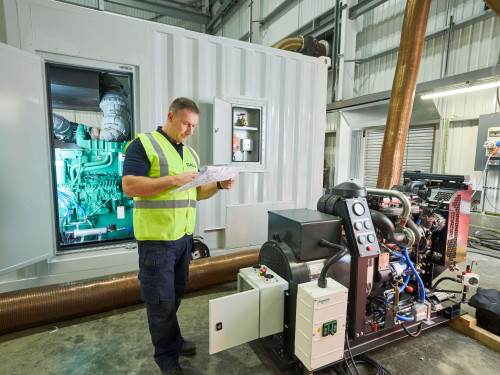
Once the generator has been installed successfully, it will require further attention before the system will operate as intended. ‘Commissioning’ refers to the tests that are carried out to ensure that the generator works as intended. Certain components need to be completed before the generator is ready for commissioning. Upon completion, each component needs to be verified to ensure the generator is fully operational to achieve optimum performance.
Commissioning generally means booting up the generator system, which needs to be tested to make sure that it works as it was designed to. Generators feature complex mechanics and there are certain components that have to be checked prior to the boot-up in order for the system to be ready for commissioning. Once all components have been verified, typically the boot-up should run smoothly and will not require additional trips.
This depends on the load being supported and whether the unit connects across site supporting multiple loads. For dedicated loads and locations single units are often utilised, however we would recommend for single units there is a connection for routine load bank testing and a temporary hire unit should one be required. For centralised standby generators these are normally configured in an N+ configuration, to ensure the most critical loads can be supported in the event of servicing or failure of one of the generator units.
Proper attention to mechanical and electrical engineering details will assure a satisfactory power system installation. Factors to be considered in the installation of a generator are:
Access and maintenance location
Floor loading
Vibration transmitted to building and equipment
Engine exhausts piping and insulation
Noise reduction
Method of engine cooling
Size and location fuel tank
Local, national and insurance regulations
Smoke and emissions requirements
A generator is a very large piece of technical equipment that features many complex components, each of which could face inefficiencies due to a number of reasons. Generator commissioning will ensure that each and every component works as it should, achieving a successful generator installation without the need for an additional trip.
Replacement batteries can be purchased for UPS. Replacing the batteries every 3-5 years can extend the lifespan of your UPS. We can advise you on the best battery for your product. We sell a wide range of batteries including: valve regulated lead acid batteries; flooded lead acid batteries; flooded nickel cadmium batteries (NiCd batteries); gas recombination low maintenance NiCd batteries; and lithium ion stationary batteries.
Put simply, yes. A generator service and/or UPS service can determine any existing and future power supply problems that could impact equipment performance. Planned and preventative maintenance can extend machine efficiency, assures optimal working conditions and conserves the life span of the equipment. Along with determining when replacements will be needed for a seamless transition, planned and preventative maintenance is a far cheaper solution compared to complete equipment replacement.
Depending on the size and complexity of your site, as well as the number of tanks, the inspection should take from 1-3 days to complete. Upon completion, a bound and electronic copy of the report will be given to you, and recommendations made about what to do going forward.
OFTEC inspections should be carried out annually and we suggest timing the inspection with regular servicing or maintenance as this can save your company money against multiple call outs. Upon a pass the OFTEC certificate is valid for 5 years.
Nearly all electronic and electrical equipment, regardless of how well-designed and built it is, will eventually break down unless it is maintained according to the manufacturer’s instructions. Wear and tear is common with electrical equipment, but it has severe consequences for UPS systems and generators, where financial, reputation and potentially life-threatening damage comes into play. It is highly recommended that as a minimum you service your power systems annually in order to maintain its working lifecycle. Our service contracts include everything from AC maintenance, DC maintenance and generator maintenance through to analogue metering, intelligent monitoring, remote monitoring and spare parts, as well as callouts, minor fault fixes and access to our customer portal, where you can access management information reports and other key details on your power supply systems.
UPS manufacturers usually recommend that UPS maintenance should be carried out within the first year of installation, and then annually from there on out as a minimum. However, if you notice any issues with your UPS system beforehand, then you should always contact your power supply partner as soon as possible to rectify them, and to ensure that UPS repairs are carried out swiftly and efficiently. The right check up could be the difference between business continuity and costly downtime, so UPS maintenance is always worth the time and effort.
Without proper maintenance, generators can fall prey to failures and power outages. Generator manufacturers generally recommend that a generator should be serviced after the first year of installation and on an annual basis there on after. We also suggest carrying out regular visual inspections to keep on top of any faults within your generator that may require maintenance sooner than anticipated.
Factors that may result in more frequent maintenance include:
Exposure to extreme temperatures and weather can damage components of the generator.
Airborne contaminants such as dust and sand may infiltrate the generator, causing damage to its internal components.
Excess usage: Most diesel generators are designed to provide backup power. Should a standby generator be used for prime power, care should be taken to ensure the generator is inspected frequently and only used for as long as it is required.
Lack of usage: Similarly, if a generator is left dormant longer than expected, engine exercise should be carried out to avoid battery failure.
Batteries have a typical lifespan of 3 – 5 years, with causes of battery failure including loss of electrolyte and inaccurate float charge voltage. However, factors such as battery chemistry, battery cycling and suitable storage conditions can greatly affect how long your battery lasts. We strongly recommend carrying out battery maintenance tests to keep abreast of any battery faults or issues, as batteries are one of the most integral parts of your UPS system. Battery testers can visit your business, site or facility every 6 months to a year, ensuring you’re always in control of your critical power equipment.
To comply with British Standards, the base material should be either:
Concrete at least 100mm thick.
Paving stones at least 50mm thick.
Stonework at least 50mm thick.
The overall size of the base should be larger than the oil storage tank and any integral oil storage tank bund, so that when the oil storage tank is installed, the base has a clear projection of a minimum of 300mm around all sides of the oil storage tank.
We have no doubt of your trained eye, but an OFTEC inspection provides assurance that your tank is fine, and can function properly. When exposed to the elements, steel pipes can rust, and plastic becomes brittle. Similarly, poor installation can put large amounts of pressure on the tank, leading to leaks and pollution. Having your oil tanks inspected will considerably reduce any risk, and leave you less liable should an issue occur.
As batteries go unused, with no charging schedule, their battery life will decrease. When it comes to the self-discharge characteristics of lead-acid batteries for example, it is important that they are charged after 6-10 months of battery storage. Otherwise, permanent loss of capacity will occur between 18-30 months.
Severe actions can be taken against companies that have not complied to regulations including fines, associated costs of production loss and cleaning and imprisonment. These are based on several factors concerning the overall damage of the spill, number of litres spilt and the duration it took place and of course the direct and indirect impact on the environment. Records have seen fines reach in the region of c£8M in recent years.
There are lots of things you can do to prevent oil theft, such as:
Check the fuel levels regularly to make sure that none has gone missing.
Lock the tank. Most tanks can be locked at the inspection cover or a lockable filler cap can be retro fitted to existing oil tanks.
Install automatic movement sensor security lighting around the tank.
Fuel polishing involves a number of steps, all of which help to keep your secure power solution at optimum performance.
Regular Sampling and Testing – Fuel sampling on site to access fuel cleanliness and fuel quality.
Fuel Treatment – Identify and deliver the most appropriate solution to bring your fuel back to optimum condition.
Fuel Storage and Handling Procedures – Advise on handling and storage including tank cleaning, testing, repair and replacement.
Fuel Maintenance – Fuel polishing systems are available to suit any tank in any application. All systems operate “stand alone” with basic 24/7 digital timers or advanced remote control and monitoring.
Generator maintenance includes everything from exhaust treatment and OFTEC qualified fuel tank inspections, through to fuel management and radiator cleaning. It also includes load bank testing to ensure your standby generator can operate at its optimum kW output, as well as control system management and remote monitoring services that allow your maintenance provider to access to your generator from afar so they can make critical decisions should an issue occur.
Knowing exactly which parts are needed is of vital importance to successfully repairing any damaged or faulty generators. First, you must identify which part needs replacing, then you need to find the corresponding part for the exact make and model of your generator. Our dedicated team use a parts identification system and an advanced ordering system to get you the right part when you need it most.
It is a common misconception that fuel can be stored in bulk for long periods without requiring any maintenance. However, this is simply not true. Like most substances, fuel can easily become contaminated when left for a considerable amount of time. Microbes can be particularly troublesome and if left untreated, the contaminated fuel could jeopardise the performance of your generator and ultimately lead to power downtime.
OFTEC (Oil Firing Technical Association) is the industry body that governs the assessment and certification of fuel storage and associated pipework.
An OFTEC Inspection concerning the fuel tank is an assessment of the tank and pipework ensuring the health and safety of individuals and the environment. By carrying out such an inspection by a qualified engineer you are minimising the risks and associated penalties.
Fuel management is necessary for the upkeep of your fuel, as diesel can often be subject to contamination over time. It is just as important to maintain your fuel as it is your generator, as your fuel could jeopardise the efficiency of the whole system.
Load bank testing is typically carried out during preventive maintenance, and is a way of validating the correct operational performance and battery autonomy of your generator. Testing this under load conditions, a load test can determine battery condition and when they are approaching their end of working life, not holding a charge or are about to fail. This allows a load bank tester to replace them in advance of breakdown or failure, ensuring that critical power supply is always available.
A load bank test will provide timely identification of problems with the generator and an indication of remedial actions that should be taken. In the case of a standby generator, a load bank test will indicate the engine’s ability to provide the required power; the alternator’s capability to provide the required voltage stability; stable frequency; efficiency of control systems under varying conditions of load; performance of the whole system; oil and fuel pressure. It will also help remove deposits from pistons, engine castings and exhausts, identify potential weaknesses, record results and any work that needs to be done.
Remote monitoring systems allow you to check up on your UPS and generator systems from a computer or smart device from a remote location. Your device connects to offer reports and data on the functionality of your UPS and generator systems. Featured functions include checking vital systems, turning generators in the field on and off and viewing various statistics.
The standard lifespan for VRLA batteries is 3 – 5 years. However, expected battery life can vary dependent on environmental conditions, number of discharge cycles, and suitable maintenance. Having a regular schedule of battery maintenance and battery monitoring to ensure that you know when your batteries are reaching their end-of-life is always a good idea.
The IEE defines ‘end of useful life’ for a UPS battery as the point where it can no longer supply 80% of its rated capacity in ampere-hours. When your battery reaches 80% of its rated capacity, the ageing process accelerates and the battery should be replaced.
A bypass automatically and instantaneously transfers the load to the mains electricity supply when there’s an internal fault or failure with your UPS system. This allows general servicing to continue without causing disruption to the load. In effect, running on a bypass circumvents the UPS (i.e. the rectifier, batteries and inverter) and ensures power continuity while the UPS is fixed or swapped out.
Internal static bypass switches should not be confused with an external maintenance bypass switch, which is an option that enables the UPS to be powered down manually for maintenance to be carried out while the critical load is powered directly from the mains. External maintenance bypass switches tend to be mechanical in the form of a wraparound or rotary switch or set of circuit breakers.
OFTEC inspections provided by Dale are carried out by registered technician/engineer.
To keep your systems up and running, original spare parts are needed to maintain your generator. Our quality OEM parts, from air filters to complete engine or alternator replacements, keep your generators running for longer. These parts are also covered by a warranty to give you even more longevity out of your generator.
No matter the make, model or manufacturer, most generators are going to need some sort of repair. Ensuring that you have the correct parts to carry out vital repairs can be the difference between routine maintenance and a full system shutdown. Ensure that you are stocked and prepared for any faults.
A controlled, load bank test, checks that all aspects of the system are working correctly, including the entire electrical supply infrastructure (cabling, switchgear, generator, fuses) ensuring your system is capable of taking on a full load during a power outage. Back-up power will only work if it can support the required critical power load and therefore, we would always recommend regular load bank testing if the generator is not being used on the building load.
Having constant access to vital statistics on efficiency, fuel tank levels, power monitoring equipment and HVAC infrastructure keeps you in the know at all times. Our system lets you spot any faults, errors or changes in the system, changing a system-shutdown level fault to a minor repair, stopping any potential downtime.
The critical nature of UPS systems means that they need to be serviced regularly to ensure that the internal workings of the units and their batteries are functioning correctly. More than this, UPS maintenance is needed to prevent failure-induced downtime, which could also compromise the equipment the UPS systems have been installed to protect. UPS maintenance can therefore secure confidential information and data and reduce the likelihood of damaging lags or sags in a power supply that could hinder access to this. Ensuring optimum UPS system efficiency – UPS maintenance evaluates your whole system and provides support with prolonged lifecycle management.
To ensure that all systems are running at optimum levels, it’s imperative to have a system that lets you easily monitor and control your UPS or generator’s performance. Remote monitoring allows you to keep an eye out for any potential faults before they occur, drastically reducing downtime and any repair costs.
UPS maintenance is extensive and far-reaching, and when carried out by our technical team, is highly successful. UPS maintenance involves the testing and inspection of your UPS systems, and making any necessary adjustments for power continuity. A visual inspection of the area surrounding your UPS and battery equipment will typically be carried out first, with UPS maintenance seeking to identify any operational abnormalities. Following this, we can carry out battery maintenance, battery management, enclosure maintenance and load bank testing, as well as control system management, voltage testing, and replace faulty parts with new ones. This can include batteries, capacitors, alternators and fans.
How often should UPS maintenance be carried out?
This depends on the criticality of the load and the environment the system operates in, but as a general guide:
Quarterly visual/operational checks — for business-critical sites (data centres, hospitals, manufacturing lines), a light-touch inspection every 3 months helps catch developing issues early.
Annual full preventative maintenance — most manufacturers recommend at least one full service per year, covering battery testing, capacitor checks, fan/alternator inspection and firmware/control system review.
Bi-annual for harsher environments — UPS systems operating in WIMES-rated or otherwise harsh conditions (dust, moisture, temperature extremes) typically need servicing twice yearly to stay within warranty and compliance requirements.
Battery-specific testing every 6–12 months — batteries degrade faster than the rest of the system and benefit from more frequent, dedicated testing regardless of the wider maintenance schedule.
The right interval ultimately depends on load criticality, site conditions and manufacturer warranty terms — our UPS Servicing team can recommend a tailored schedule as part of a site survey.
Filter