Our Uninterruptible Power Supply (UPS) systems provide reliable backup power, safeguarding critical operations against power loss and other electrical disruptions.
No matter how complex or critical your operation, our UPS solutions are built to provides a vital power bridge between mains failure and Generator activation. From commercial environments to heavy-duty industrial conditions, we deliver tailored systems that meet your power requirements, supported by our expert team from design to installation and long-term maintenance.
.png) With over 90 years of power expertise and 57 years of UPS experience under the Erskine name, Dale Power Solutions is a trusted provider of commercial and industrial UPS systems. Our solutions are relied upon by major organisations across sectors, as demonstrated in our Case Studies, and are backed by in-house design, installation, and maintenance expertise.
With over 90 years of power expertise and 57 years of UPS experience under the Erskine name, Dale Power Solutions is a trusted provider of commercial and industrial UPS systems. Our solutions are relied upon by major organisations across sectors, as demonstrated in our Case Studies, and are backed by in-house design, installation, and maintenance expertise.
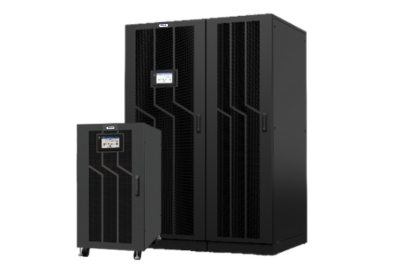
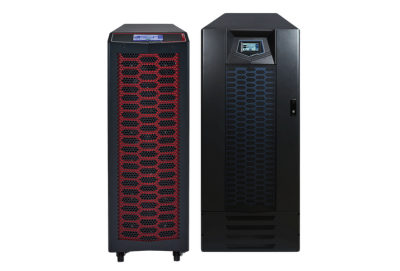
Ideal for business and IT applications such as server rooms and data centres, our Commercial UPS systems are designed for clean, temperature-controlled environments. With regular preventative maintenance, these systems can provide reliable protection for 10 to 12 years. Battery runtime can extend up to several hours, depending on the configuration and load. Models are available in both tower and rack formats to suit your infrastructure.
Single-phase UPS (1kVA to 100 kVA): Suitable for lower-power requirement applications like computers, telecoms, network switches, and rack-mounted servers typically using standard UK 3-pin plugs.
Three-phase UPS (10kVA to 600kVA): Designed for higher-load demands such as data centres and hospitals.
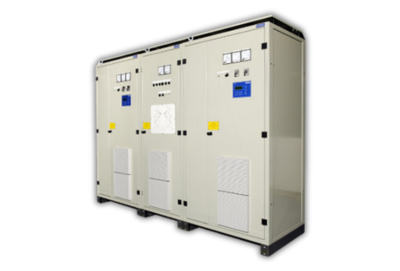
Our Erskine Industrial UPS systems are engineered for demanding environments, from offshore oil rig sites and onshore power plants to manufacturing facilities where downtime is costly. Designed to maintain critical loads without disruption, these systems offer 20+ years of service life, with battery backup ranging from 60 to 480 minutes. Built to operate in high temperatures and harsh conditions, they’re ideal for critical, round-the-clock industrial operations.
Our High Ingress Protection (IP) Environmental UPS systems are designed to withstand challenging industrial applications, offering protection against dust, moisture, and temperature extremes. For water industry applications, our WIMES-compliant UPS options meet the rigorous specifications required to safeguard essential infrastructure.
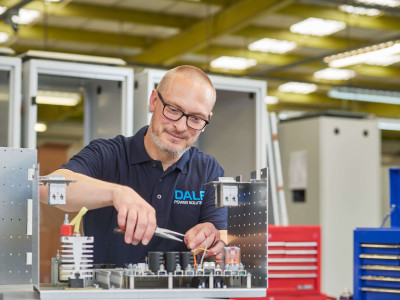
From design and installation to upgrades, servicing and 24/7 emergency support, we go beyond simply supplying UPS systems; we keep your power protected long term.
Talk to Our Team Today
Containerised UPS are housed in standard shipping containers. This makes them easy to transport, and install, and they can be used in a variety of locations, both indoors and outdoors. They typically include all the components necessary for power protetion, such as: UPS system, batteries, bypass switch, air conditioning, power monitoring and fire supression. We can help you customise the UPS to meet the needs of a specific application, such as adding additional batteries for longer runtime or paralleling multiple UPS systems for increased redundancy.
When a power outage occurs, a UPS will immediately switch to battery power to provide a continuous power supply to connected equipment. However, the UPS batteries have a limited runtime, so a generator is needed to provide long-term power protection. When initiated the UPS will send a signal to the generator to start up. Once the generator is running, the UPS will switch to generator power. When the power outage is over and grid power is restored, the UPS will return to utility power and recharge its batteries. The generator will then shut down.
When disruption to your power occurs it will provide instantaneous protection by immediately resorting to the onboard battery which forms part of the uninterruptible power supply.
A generator provides standby power until the mains power can be reinstated during a power outage. This is supported by a UPS (Uninterruptible Power Supply) which ensures a seamless transition from your mains power to your backup power supply. Batteries provide power to your UPS and generator.
An uninterruptible power supply (UPS) provides a source of power for the equipment it protects. If there is a disruption to power, the UPS has an on-board battery to automatically supply to electrical equipment until the disruption is over or back-up generators kick-in.
WIMES (Water Industry Mechanical and Electrical Specifications) UPS (uninterruptible power supply) is a robust critical power system built for harsh atmospheres such a dusty environments, moisture and humidity, as well as extremes in temperature and sites where robust solutions are required. They are available for both industrial and commercial applications.
The UK electricity system has experienced high levels of grid resilience historically – offering a high degree of confidence to businesses and consumers that power will be available 24 hours a day, 7 days a week, 365 days per year. However, we must be able to respond to the more severe, less frequent events to ensure power supplies are maintained or restored quickly following such an event. Therefore, grid resilience is ‘the ability to withstand and reduce the magnitude and/or duration of disruptive events, which includes the capability to anticipate, absorb, adapt to, and/or rapidly recover from such events‘.
Before recommending any products or services, we will always discuss site requirements with you to give us a greater understanding of your needs. In general however, it is likely that you will need one of the following products and services for grid resilience:
Backup generator.
Battery replacement.
Battery based Distributed Storage Solutions (DSS).
UPS maintenance.
Generator maintenance.
Spare parts.
The backup power you require depends on a number of factors and will be unique to your circumstances. When considering your needs you should think about the following:
Critical loads
What equipment or part of your estate is it that directly affects your ability to maintain key operations and that must be kept running during a mains power supply failure, for example a data centre’s servers or life support equipment in a hospital.
Essential loads
What is it that provides secondary support services that even though they aren’t operationally critical, may still be required for health and safety reasons, such as emergency lighting. These loads must still have some form of backup but do not require uninterrupted power, so can be allowed to fail or ride through the time it takes for a generator to start.
Non-essential loads
Finally, there is the equipment and parts of your organisation that you can afford to lose when the mains power supply fails, for example printers, general lighting and desk fans.
You may have generators on-site but in the event the power supply fails you may have systems where you can’t afford to have down time whilst the generator kicks-in. A uninterruptible power supply (UPS) can save your operations and prevent the loss of critical data by keeping your equipment running in the event of a power outage.
Grid resilience means the ability to resume operations quickly following a disruption such as a power outage or blackout. This stability is important for sectors such as healthcare which rely on life saving equipment. Grid resiliency is also the ability to cope with increasing demand which is increasingly significant as we transition to net zero and our demands for electricity increase.
Yes, a containerised UPS (uninterruptible power supply) system can be installed on a roof, car park or where space is limited.
Upon installation, the UPS requires further attention before it is fully operational. Certain connections, components and peripherals need to be checked and tested to ensure that the UPS works as designed. Once these checks have been completed, the UPS can then be commissioned and will operate at optimum performance without the need for more tests.
Site assessment – Detailed site assessments are carried out to determine how your equipment can be delivered and installed on site. In the instance where sites involve additional requirements depending on the location, we can arrange anything that you need.
Delivery – We arrange the safe transport and delivery of your equipment to any site around the world at a time that suits the customer.
Installation – We manage every aspect of the installation to ensure that your equipment is efficiently and fully operational to your requirements.
System testing – Once installed, your equipment is thoroughly tested and commissioned to the customer’s specification ready for hand over.
End user training – We can train you to operate your equipment safely, so that you can make configuration changes when you want.
UPS commissioning is more complex than simply switching it on after it has been installed. Instead, there are a number of connections, components and peripherals that need testing prior to switching the UPS on. Commissioning refers to a boot-up process, which relies upon the success of individual components working efficiently as intended.
UPS commissioning is more complex than simply switching it on after it has been installed. Instead, there are a number of connections, components and peripherals that need testing prior to switching the UPS on. Commissioning refers to a boot-up process, which relies upon the success of individual components working efficiently as intended.
Replacement batteries can be purchased for UPS. Replacing the batteries every 3-5 years can extend the lifespan of your UPS. We can advise you on the best battery for your product. We sell a wide range of batteries including: valve regulated lead acid batteries; flooded lead acid batteries; flooded nickel cadmium batteries (NiCd batteries); gas recombination low maintenance NiCd batteries; and lithium ion stationary batteries.
Put simply, yes. A generator service and/or UPS service can determine any existing and future power supply problems that could impact equipment performance. Planned and preventative maintenance can extend machine efficiency, assures optimal working conditions and conserves the life span of the equipment. Along with determining when replacements will be needed for a seamless transition, planned and preventative maintenance is a far cheaper solution compared to complete equipment replacement.
Nearly all electronic and electrical equipment, regardless of how well-designed and built it is, will eventually break down unless it is maintained according to the manufacturer’s instructions. Wear and tear is common with electrical equipment, but it has severe consequences for UPS systems and generators, where financial, reputation and potentially life-threatening damage comes into play. It is highly recommended that as a minimum you service your power systems annually in order to maintain its working lifecycle. Our service contracts include everything from AC maintenance, DC maintenance and generator maintenance through to analogue metering, intelligent monitoring, remote monitoring and spare parts, as well as callouts, minor fault fixes and access to our customer portal, where you can access management information reports and other key details on your power supply systems.
UPS manufacturers usually recommend that UPS maintenance should be carried out within the first year of installation, and then annually from there on out as a minimum. However, if you notice any issues with your UPS system beforehand, then you should always contact your power supply partner as soon as possible to rectify them, and to ensure that UPS repairs are carried out swiftly and efficiently. The right check up could be the difference between business continuity and costly downtime, so UPS maintenance is always worth the time and effort.
Batteries have a typical lifespan of 3 – 5 years, with causes of battery failure including loss of electrolyte and inaccurate float charge voltage. However, factors such as battery chemistry, battery cycling and suitable storage conditions can greatly affect how long your battery lasts. We strongly recommend carrying out battery maintenance tests to keep abreast of any battery faults or issues, as batteries are one of the most integral parts of your UPS system. Battery testers can visit your business, site or facility every 6 months to a year, ensuring you’re always in control of your critical power equipment.
As batteries go unused, with no charging schedule, their battery life will decrease. When it comes to the self-discharge characteristics of lead-acid batteries for example, it is important that they are charged after 6-10 months of battery storage. Otherwise, permanent loss of capacity will occur between 18-30 months.
Remote monitoring systems allow you to check up on your UPS and generator systems from a computer or smart device from a remote location. Your device connects to offer reports and data on the functionality of your UPS and generator systems. Featured functions include checking vital systems, turning generators in the field on and off and viewing various statistics.
The standard lifespan for VRLA batteries is 3 – 5 years. However, expected battery life can vary dependent on environmental conditions, number of discharge cycles, and suitable maintenance. Having a regular schedule of battery maintenance and battery monitoring to ensure that you know when your batteries are reaching their end-of-life is always a good idea.
The IEE defines ‘end of useful life’ for a UPS battery as the point where it can no longer supply 80% of its rated capacity in ampere-hours. When your battery reaches 80% of its rated capacity, the ageing process accelerates and the battery should be replaced.
A bypass automatically and instantaneously transfers the load to the mains electricity supply when there’s an internal fault or failure with your UPS system. This allows general servicing to continue without causing disruption to the load. In effect, running on a bypass circumvents the UPS (i.e. the rectifier, batteries and inverter) and ensures power continuity while the UPS is fixed or swapped out.
Internal static bypass switches should not be confused with an external maintenance bypass switch, which is an option that enables the UPS to be powered down manually for maintenance to be carried out while the critical load is powered directly from the mains. External maintenance bypass switches tend to be mechanical in the form of a wraparound or rotary switch or set of circuit breakers.
Having constant access to vital statistics on efficiency, fuel tank levels, power monitoring equipment and HVAC infrastructure keeps you in the know at all times. Our system lets you spot any faults, errors or changes in the system, changing a system-shutdown level fault to a minor repair, stopping any potential downtime.
The critical nature of UPS systems means that they need to be serviced regularly to ensure that the internal workings of the units and their batteries are functioning correctly. More than this, UPS maintenance is needed to prevent failure-induced downtime, which could also compromise the equipment the UPS systems have been installed to protect. UPS maintenance can therefore secure confidential information and data and reduce the likelihood of damaging lags or sags in a power supply that could hinder access to this. Ensuring optimum UPS system efficiency – UPS maintenance evaluates your whole system and provides support with prolonged lifecycle management.
To ensure that all systems are running at optimum levels, it’s imperative to have a system that lets you easily monitor and control your UPS or generator’s performance. Remote monitoring allows you to keep an eye out for any potential faults before they occur, drastically reducing downtime and any repair costs.
UPS maintenance is extensive and far-reaching, and when carried out by our technical team, is highly successful. UPS maintenance involves the testing and inspection of your UPS systems, and making any necessary adjustments for power continuity. A visual inspection of the area surrounding your UPS and battery equipment will typically be carried out first, with UPS maintenance seeking to identify any operational abnormalities. Following this, we can carry out battery maintenance, battery management, enclosure maintenance and load bank testing, as well as control system management, voltage testing, and replace faulty parts with new ones. This can include batteries, capacitors, alternators and fans.
How often should UPS maintenance be carried out?
This depends on the criticality of the load and the environment the system operates in, but as a general guide:
Quarterly visual/operational checks — for business-critical sites (data centres, hospitals, manufacturing lines), a light-touch inspection every 3 months helps catch developing issues early.
Annual full preventative maintenance — most manufacturers recommend at least one full service per year, covering battery testing, capacitor checks, fan/alternator inspection and firmware/control system review.
Bi-annual for harsher environments — UPS systems operating in WIMES-rated or otherwise harsh conditions (dust, moisture, temperature extremes) typically need servicing twice yearly to stay within warranty and compliance requirements.
Battery-specific testing every 6–12 months — batteries degrade faster than the rest of the system and benefit from more frequent, dedicated testing regardless of the wider maintenance schedule.
The right interval ultimately depends on load criticality, site conditions and manufacturer warranty terms — our UPS Servicing team can recommend a tailored schedule as part of a site survey.
Filter